Categories
New Products
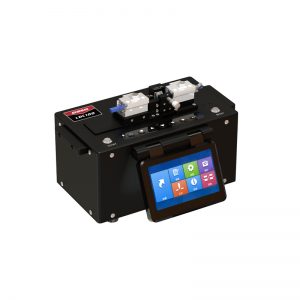
LDC-100 Large Diameter Optical Fiber Cleaver * Applicable to cladding diameter 80μm~1250μm fibers * Vacuum pump V-groove convenient to put fiber * Durable blade, lifetime more than 20000 times * Data storage 4000 groups * User friendly GUI menu, easy to operate more
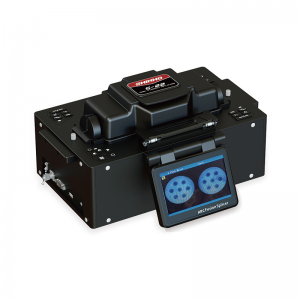
S-22 Multi-Core Fiber Fusion Splicer The 1st Fully Automatic Multi-core Fiber Fusion Splicer in China more
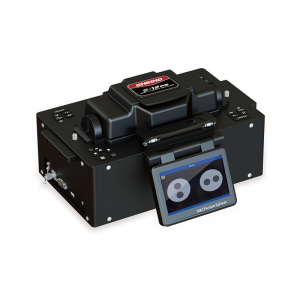
Polarization Maintaining (PM) Fiber Fusion Splicer S-12 *Suitable for SM/MM/PM fibers splicing * Core to core alignment, low splicing loss * Endview and Profile observation and alignment * Arc automatic calibration and splicing * PM fiber 45 and 90 degree alignment * Applicable to variety fibers splicing, such as Panda ,bow-tie and elliptical fiber more
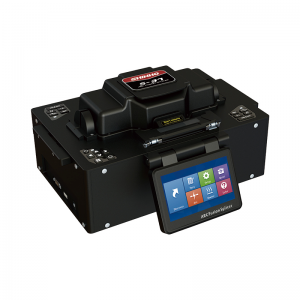
S-37 LDF Speialty Fiber Fusion Splicer SHINHO S-37 is the latest model we developed, it could splice fiber cladding diameter from 125 to 680μm with low splice loss. We equipped the machine with 3 different fiber holders, and 2 pairs of spare electrodes. more
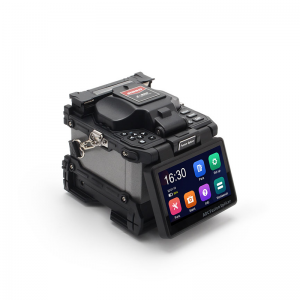
Core to Core Alignment Fiber Fusion Splicer X900 Six motors fusion splicer, real core to core alignment technology. Typical splicing time: 6-12 seconds, fast splicing 6 seconds Typical heating time: 18s heating, identify fiber types automatically. Typical splice loss:G651: 0.01dB; G652: 0.02dB; G653: 0.04dB; G654: 0.04dB; G.655:0.04dB; G657:0.02dB. Battery Capacity: 5200mAh Li-battery, typical 300 cycles splicing and heating. Used for WAN/ MAN/ Telecommunication projects. more
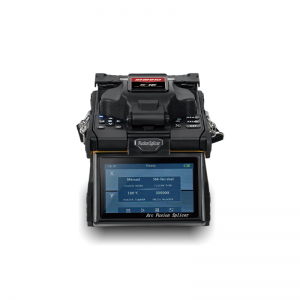
Robust Multi Function ARC Fusion Splicer S16 76cm dropping anti-shock, IP5X dustproof and IPX2 water resistant Touch screen display, combined with keypad operation Multi function holder for bare fiber, patch cords, drop cable etc. Fast splicing and heating, automatic ARC calibration. more
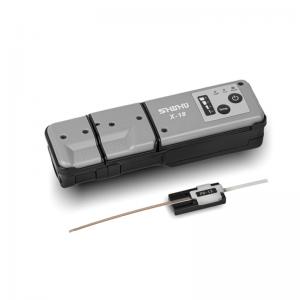
SHINHO X-18 Ribbon Fiber Thermal Stripper Shinho X-18 Thermal Stripper is a newly developed hand-held thermal stripper, specially designed for nondestructive thermal stripping of the jacket of ribbon cable up to 12 fibers. A good and reliable tool for ribbon fiber splicing work. more
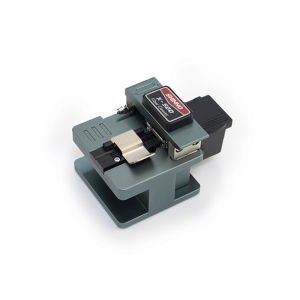
High Precision Fiber Optic Cleaver X-50D Small size& light weight, easy to operate. High precision and stable performance. More than 48000 time blade life,fiber cleaved length 5~20mm. High quality material more
Fiber Optic Recoating Machine: A Key Process Equipment for High-Reliability Fiber Systems
A fiber optic recoating machine is a specialized device used to restore the protective coating of optical fibers. It is mainly applied after fiber stripping, splicing, or repair processes. By using UV-curable materials, it re-applies a protective layer to bare fiber, restoring its mechanical strength and environmental resistance close to the original level.
In modern fiber optic communication, fiber laser systems, and fiber sensing applications, stripped fiber becomes extremely fragile. Without proper protection, it is highly susceptible to breakage, micro-bending loss, and long-term reliability issues. Therefore, the recoating process has become an essential step in high-reliability fiber systems.
During fiber splicing or repair, the original coating must be removed to allow precise alignment and fusion splicing. However, once the coating is removed, the bare fiber has several critical weaknesses:
· Significantly reduced mechanical strength
· Extremely sensitive to bending and tension
· Poor long-term reliability
· Vulnerable to moisture and contamination
A fiber recoating machine solves this problem by using a mold-forming process combined with UV curing to recreate the protective coating, restoring a stable and durable fiber structure.
In high-power fiber laser systems (especially kilowatt-level and above), optical fibers operate under extremely high energy density for long periods. Without proper recoating protection, splice points or repaired sections may suffer from:
· Thermal damage
· Fiber breakage
· Reduced long-term stability
Therefore, recoating machines are widely used in fiber laser manufacturing and repair, serving as a critical process to ensure system reliability.

In distributed acoustic sensing (DAS), fiber optic gyroscopes (FOG), and fiber Bragg grating (FBG) systems, the optical fiber itself acts as the sensing medium.
Since signal accuracy depends heavily on fiber integrity, even minor mechanical damage or stress changes can affect measurement performance. Recoating ensures long-term stability and consistency of sensing systems.

In military, aerospace, and anti-interference communication systems, optical fibers often operate in harsh environments such as vibration, temperature extremes, and strong electromagnetic interference.
These applications demand extremely high reliability, and fiber recoating significantly improves mechanical robustness and environmental resistance, making it an essential process for mission-critical communication links.

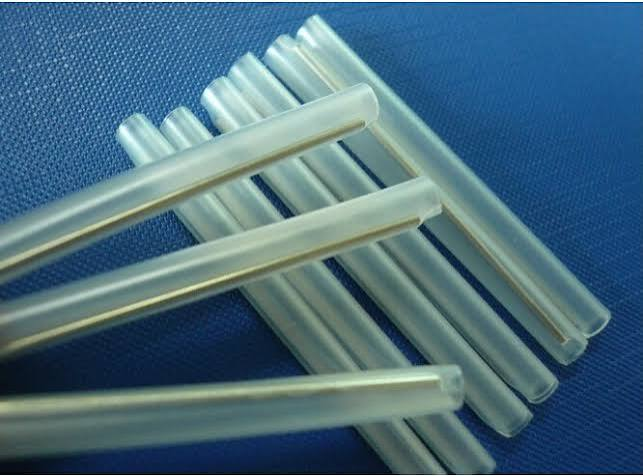
In practical engineering, heat shrink tubes are sometimes used as a low-cost alternative. However, the two methods are fundamentally different:
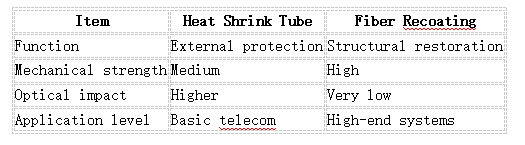
In simple terms: heat shrink provides protection, while recoating restores the fiber structure.
With the continuous development of fiber optic technology toward higher power, higher precision, and more specialized applications, the importance of recoating technology is increasing. Key trends include:
Higher laser power requires stronger and more reliable fiber structures, making recoating quality critical to system lifetime and safety.
Technologies such as DAS are being widely adopted in energy, transportation, and security sectors, requiring long-term stable operation.
Emerging fibers such as polarization-maintaining (PM) fiber and hollow-core fiber require more precise repair and protection processes.
Although a fiber optic recoating machine does not directly participate in signal transmission or laser output, it plays a critical role in restoring and protecting optical fibers within high-performance systems.
Its value can be summarized as follows:
In high-end fiber systems, long-term reliability is not determined only by the fiber itself, but by how well it is restored and protected after splicing.
As fiber laser, fiber sensing, and specialty fiber technologies continue to evolve, fiber recoating machines will play an increasingly important role in ensuring system stability and reliability across advanced applications.

Welcome to register the newsletter if you have any interest in our products, we will keep you informed of our news, products information and promotions if there is any.
© Copyright: SHINHO OPTICS LIMITED All Rights Reserved.


 English
 français
 русский
 italiano
 español
 português
 العربية
 ไทย
ไทย हिन्दी
 Indonesia
 中文
中文