Categories
New Products
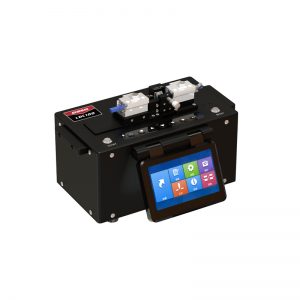
LDC-100 Large Diameter Optical Fiber Cleaver * Applicable to cladding diameter 80μm~1250μm fibers * Vacuum pump V-groove convenient to put fiber * Durable blade, lifetime more than 20000 times * Data storage 4000 groups * User friendly GUI menu, easy to operate more
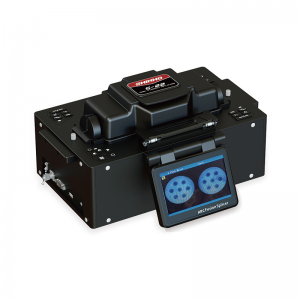
S-22 Multi-Core Fiber Fusion Splicer The 1st Fully Automatic Multi-core Fiber Fusion Splicer in China more
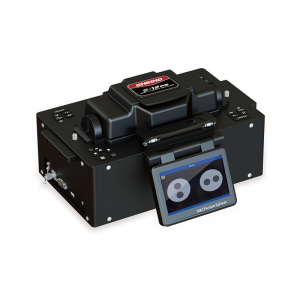
Polarization Maintaining (PM) Fiber Fusion Splicer S-12 *Suitable for SM/MM/PM fibers splicing * Core to core alignment, low splicing loss * Endview and Profile observation and alignment * Arc automatic calibration and splicing * PM fiber 45 and 90 degree alignment * Applicable to variety fibers splicing, such as Panda ,bow-tie and elliptical fiber more
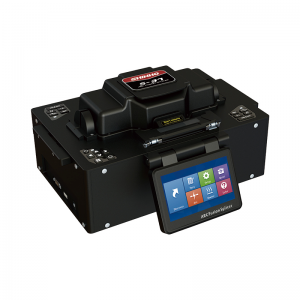
S-37 LDF Speialty Fiber Fusion Splicer SHINHO S-37 is the latest model we developed, it could splice fiber cladding diameter from 125 to 680μm with low splice loss. We equipped the machine with 3 different fiber holders, and 2 pairs of spare electrodes. more
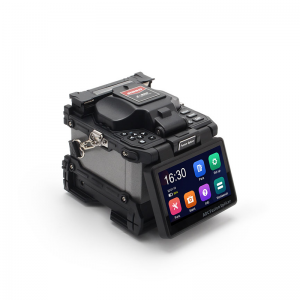
Core to Core Alignment Fiber Fusion Splicer X900 Six motors fusion splicer, real core to core alignment technology. Typical splicing time: 6-12 seconds, fast splicing 6 seconds Typical heating time: 18s heating, identify fiber types automatically. Typical splice loss:G651: 0.01dB; G652: 0.02dB; G653: 0.04dB; G654: 0.04dB; G.655:0.04dB; G657:0.02dB. Battery Capacity: 5200mAh Li-battery, typical 300 cycles splicing and heating. Used for WAN/ MAN/ Telecommunication projects. more
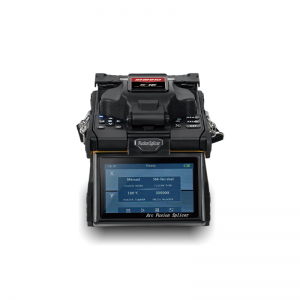
Robust Multi Function ARC Fusion Splicer S16 76cm dropping anti-shock, IP5X dustproof and IPX2 water resistant Touch screen display, combined with keypad operation Multi function holder for bare fiber, patch cords, drop cable etc. Fast splicing and heating, automatic ARC calibration. more
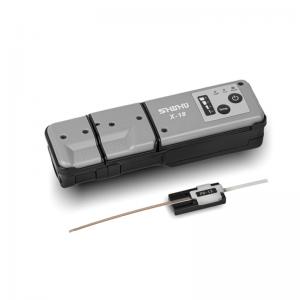
SHINHO X-18 Ribbon Fiber Thermal Stripper Shinho X-18 Thermal Stripper is a newly developed hand-held thermal stripper, specially designed for nondestructive thermal stripping of the jacket of ribbon cable up to 12 fibers. A good and reliable tool for ribbon fiber splicing work. more
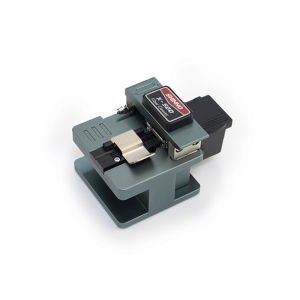
High Precision Fiber Optic Cleaver X-50D Small size& light weight, easy to operate. High precision and stable performance. More than 48000 time blade life,fiber cleaved length 5~20mm. High quality material more
Hollow-Core Fiber in High-End Communication Links
High-end communication links are defined by extreme performance requirements—ultra-low latency, ultra-high capacity, and exceptional stability. Typical scenarios include financial trading networks, long-haul backbone infrastructure, hyperscale data center interconnects, and emerging AI cluster communications.
For decades, conventional fibers such as G.652 single-mode fiber and G.654 fiber have supported the global communication system. While continuous improvements in attenuation, dispersion, and amplification technologies (e.g., DWDM systems) have significantly increased transmission capacity, these fibers remain fundamentally constrained by the physical properties of silica. In particular, latency and nonlinear effects impose hard limits on performance scaling.
Hollow-core fiber (HCF) introduces a fundamentally different guiding mechanism by confining light within an օդ-like core, rather than solid glass. This shift brings several critical advantages:
· Approximately 30% lower latency due to near-vacuum light propagation speed
· Drastically reduced nonlinear effects, enabling higher launch power
· Greater potential for capacity scaling through advanced multiplexing
These characteristics make HCF especially attractive for ultra-low latency applications, such as high-frequency trading and latency-sensitive interconnects between major data centers. In such environments, even microseconds of improvement can translate into measurable economic or computational gains.
Beyond latency-driven use cases, HCF also shows strong potential in high-capacity backbone networks. By mitigating nonlinear impairments, it allows for more efficient utilization of optical spectrum and higher total throughput per fiber. In parallel, hyperscale cloud providers such as Amazon and Google are increasingly exploring low-latency optical interconnects to optimize distributed computing and AI training performance.
However, despite its advantages, HCF is not expected to replace conventional fibers across all network layers. Challenges such as higher cost, manufacturing complexity, and stricter requirements for splicing and handling remain significant barriers. In cost-sensitive deployments—particularly access networks based on G.652 and bend-insensitive fibers—traditional solutions will continue to dominate.
Instead, the future network architecture is likely to become more stratified:
· Hollow-core fiber for performance-critical, high-value links
· Advanced solid-core fibers (e.g., G.654) for long-haul backbone transmission
· Standard single-mode fibers for access and metro networks
In conclusion, hollow-core fiber should not be viewed as a universal replacement, but as a strategic upgrade for the most demanding segments of optical communication.

Welcome to register the newsletter if you have any interest in our products, we will keep you informed of our news, products information and promotions if there is any.
© Copyright: SHINHO OPTICS LIMITED All Rights Reserved.


 English
 français
 русский
 italiano
 español
 português
 العربية
 ไทย
ไทย हिन्दी
 Indonesia
 中文
中文