Categories
New Products
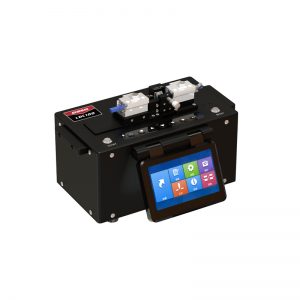
LDC-100 Large Diameter Optical Fiber Cleaver * Applicable to cladding diameter 80μm~1250μm fibers * Vacuum pump V-groove convenient to put fiber * Durable blade, lifetime more than 20000 times * Data storage 4000 groups * User friendly GUI menu, easy to operate more
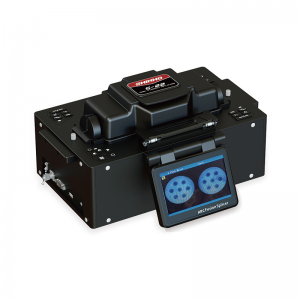
S-22 Multi-Core Fiber Fusion Splicer The 1st Fully Automatic Multi-core Fiber Fusion Splicer in China more
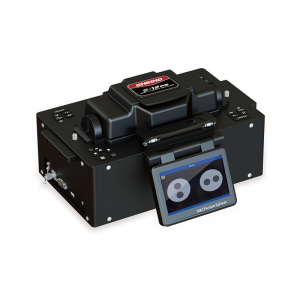
Polarization Maintaining (PM) Fiber Fusion Splicer S-12 *Suitable for SM/MM/PM fibers splicing * Core to core alignment, low splicing loss * Endview and Profile observation and alignment * Arc automatic calibration and splicing * PM fiber 45 and 90 degree alignment * Applicable to variety fibers splicing, such as Panda ,bow-tie and elliptical fiber more
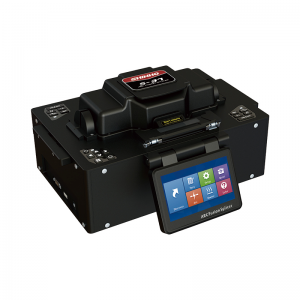
S-37 LDF Speialty Fiber Fusion Splicer SHINHO S-37 is the latest model we developed, it could splice fiber cladding diameter from 125 to 680μm with low splice loss. We equipped the machine with 3 different fiber holders, and 2 pairs of spare electrodes. more
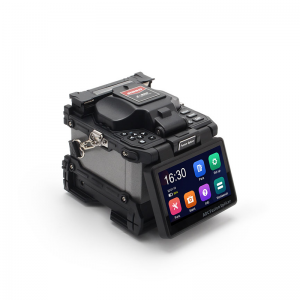
Core to Core Alignment Fiber Fusion Splicer X900 Six motors fusion splicer, real core to core alignment technology. Typical splicing time: 6-12 seconds, fast splicing 6 seconds Typical heating time: 18s heating, identify fiber types automatically. Typical splice loss:G651: 0.01dB; G652: 0.02dB; G653: 0.04dB; G654: 0.04dB; G.655:0.04dB; G657:0.02dB. Battery Capacity: 5200mAh Li-battery, typical 300 cycles splicing and heating. Used for WAN/ MAN/ Telecommunication projects. more
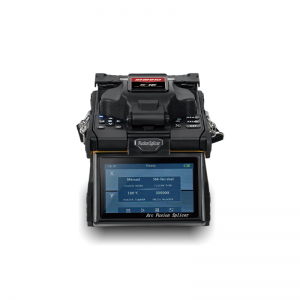
Robust Multi Function ARC Fusion Splicer S16 76cm dropping anti-shock, IP5X dustproof and IPX2 water resistant Touch screen display, combined with keypad operation Multi function holder for bare fiber, patch cords, drop cable etc. Fast splicing and heating, automatic ARC calibration. more
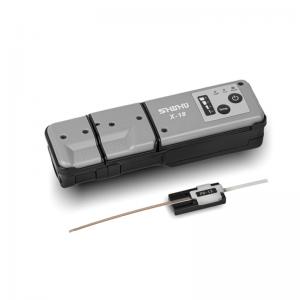
SHINHO X-18 Ribbon Fiber Thermal Stripper Shinho X-18 Thermal Stripper is a newly developed hand-held thermal stripper, specially designed for nondestructive thermal stripping of the jacket of ribbon cable up to 12 fibers. A good and reliable tool for ribbon fiber splicing work. more
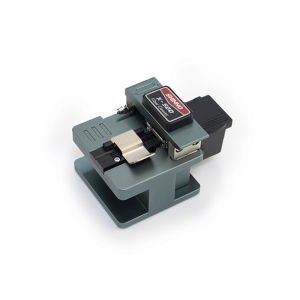
High Precision Fiber Optic Cleaver X-50D Small size& light weight, easy to operate. High precision and stable performance. More than 48000 time blade life,fiber cleaved length 5~20mm. High quality material more
How the Fiber Optic Fusion Splicer Weaves the Internet Together
In an era where we take gigabit internet for granted—streaming 4K videos without buffering, joining seamless Zoom calls, or backing up terabytes of data to the cloud in minutes—it’s easy to forget the physical infrastructure making it all possible.
Beneath our streets, running through oceans, and climbing up apartment buildings, millions of miles of glass threads carry data at the speed of light. But these fragile glass fibers don't connect themselves. They are welded together by one of the most precise, yet underappreciated, tools in the telecommunications world: the Fiber Optic Fusion Splicer.
Think of it as the world’s most meticulous sewing machine, stitching together the fabric of the internet.
A fusion splicer is a high-tech device that performs micro-surgery on glass. Its job is to take two separate optical fibers and join them end-to-end so perfectly that light passes through the joint as if the fiber were never cut.
How does it work?
The machine generates a high-voltage arc between two electrodes, creating a spark that reaches temperatures of roughly 1,800°C (3,600°F) . This intense heat melts the tips of the glass fibers, and the machine then physically pushes the ends together, fusing them into a single, continuous strand.
But here’s the catch: The core of a single-mode fiber—the actual pathway for the light—is only about 9 microns in diameter. For context, a human hair is roughly 75 microns thick. If the splicer misaligns these cores by just 1 micron, the signal degrades.
This is why a fusion splicer isn't just a "torch"; it is a marvel of optoelectronics, equipped with high-powered microscopes, stepper motors, and complex image processing algorithms.
Not all splicers are created equal. The market generally splits into two categories based on how the machine aligns the fibers: Cladding Alignment (PAS) and Core Alignment.
l Clad Alignment (PAS): This is the older, faster method. The machine looks at the outer edge of the glass (the cladding) and aligns the fibers based on that. It’s like lining two people up by the hems of their coats; it’s usually good enough, but the people inside might not be standing perfectly straight. This is commonly used for FTTH (Fiber to the Home) deployments where cost sensitivity is high and distance requirements are short.
l Core Alignment: This is the gold standard for high-speed backbone networks. Using advanced image sensors (like CCD cameras) and a multi-motor system, the splicer literally "looks" at the core of the fiber. It analyzes the geometry of the glass and aligns the cores directly. This reduces average splice loss to 0.02dB or less. When you are sending data across an ocean, that precision matters.
If you are in the market for a splicer—whether you are a contractor, a data center manager, or a utility company—the choice usually comes down to four key factors: Loss, Speed, Durability, and Cost.
1. Splice Loss: This is non-negotiable. Look for machines that consistently offer low estimated splice loss. Even a 0.1dB difference across hundreds of splices adds up to significant signal loss.
2. Speed: Time is money on a job site. Modern splicers can complete a full fusion cycle (align, melt, and estimate loss) in under 10 seconds, with heater cycles for protective sleeves taking around 15-20 seconds.
3. Environmental Toughness: Fiber splicing often happens in manholes, on telephone poles, or in dusty construction sites. You need a machine with a high Ingress Protection (IP) rating. IP52 or higher is standard, meaning the machine is resistant to dust and dripping water.
4. Electrode Life & Maintenance: The electrodes are the consumable heart of the machine. A good splicer should offer 3,000 to 5,000 arc discharges per set of electrodes. Regular maintenance, like cleaning the V-grooves (where the fiber sits) with a cotton swab, will keep the machine running for 5 to 10 years.
Even with a $10,000 high-end fusion splicer, a bad splice is still possible. The machine is only as good as the operator's preparation. The process is a ritual:
1. Strip: Remove the protective plastic coating from the fiber using a stripper.
2. Clean: Wipe the bare glass with 99% isopropyl alcohol and lint-free wipes. Any microscopic dust will burn in the arc, causing bubbles or contamination.
3. Cleave: Score and break the fiber at a perfect 90-degree angle using a cleaver. This creates a mirror-smooth surface. A bad cleave is the number one cause of high splice loss.
4. Splice: Place the fibers in the machine and hit "Set." The machine does the rest.
5. Protect: Slide a heat-shrink sleeve over the bare glass and place it in the oven. This restores the fiber's mechanical strength.
6. Test: Use an OTDR (Optical Time-Domain Reflectometer) to verify that the splice is perfect.

Welcome to register the newsletter if you have any interest in our products, we will keep you informed of our news, products information and promotions if there is any.
© Copyright: SHINHO OPTICS LIMITED All Rights Reserved.


 English
 français
 русский
 italiano
 español
 português
 العربية
 ไทย
ไทย हिन्दी
 Indonesia
 中文
中文